Halal Meal Prep for Beginners: A Practical Weekly System
Halal meal prep does not require an entire Sunday in the kitchen or a fridge filled with identical containers. This beginner-friendly system helps you plan a manageable week, shop with purpose, prepare flexible ingredients, and store meals carefully.
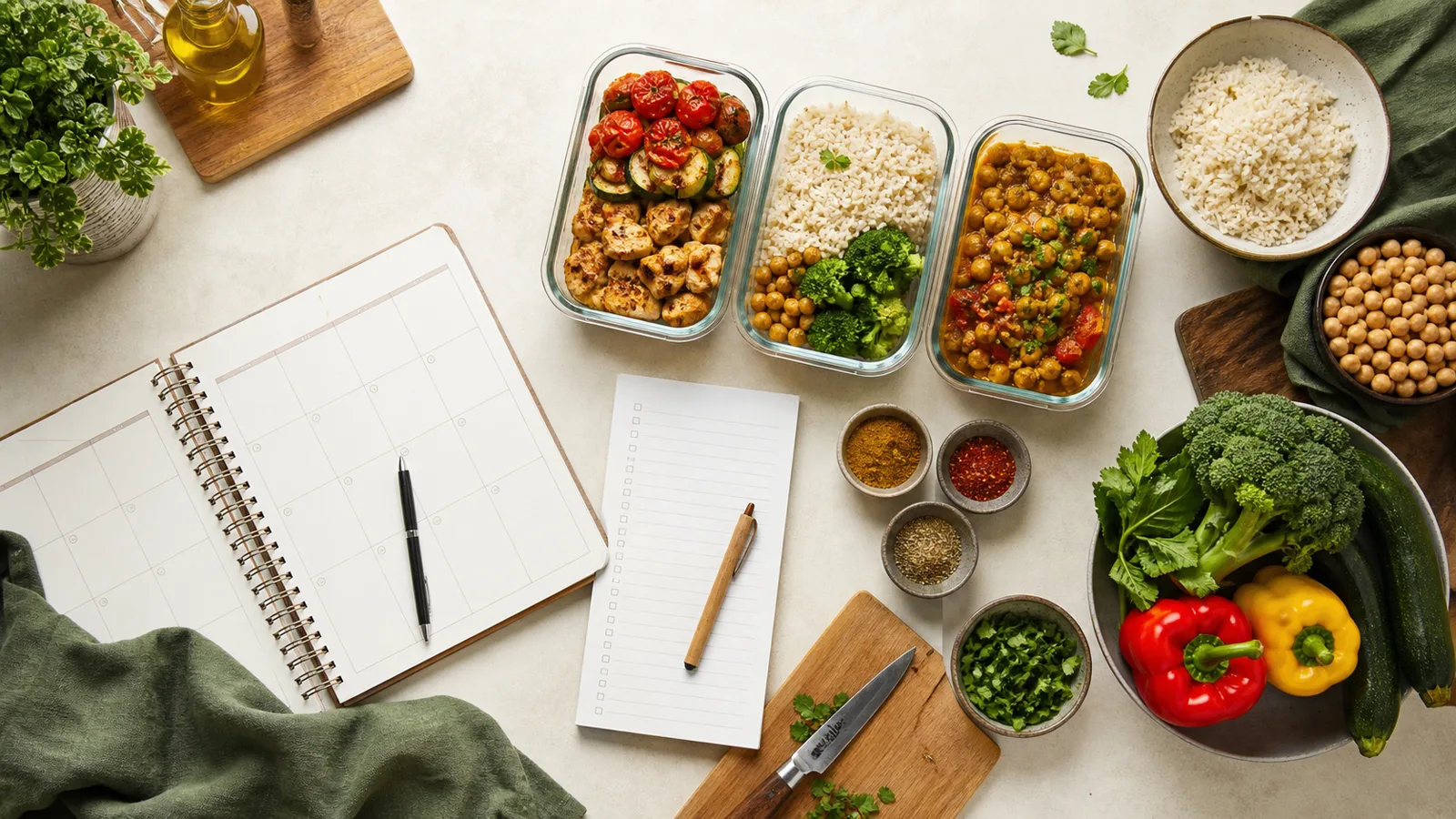
Table of Contents
Meal prep can look far more complicated online than it needs to be.
You may have seen kitchens covered with containers, detailed spreadsheets, large grocery hauls, and an entire week of meals prepared in one afternoon. That system may work for some people, but it is not the only way to meal prep.
For a beginner, the goal is much simpler: make the coming week easier.
A useful halal meal-prep routine should help you decide what to eat, shop with less confusion, and reduce the amount of cooking you need to do on busy days. It should also leave enough flexibility for changing schedules, family preferences, and evenings when you simply want something different.
You do not need to prepare every breakfast, lunch, and dinner in advance. Begin with a few meals that usually cause the most stress, then build your routine gradually.
What halal meal prep actually means
Halal meal prep combines two simple responsibilities.
The first is choosing food that meets your household’s halal requirements. This may involve checking ingredient labels, looking for certification you trust, and being especially careful with processed foods, sauces, stocks, flavourings, and ready-made products.
The second is organising some of your weekly food before you need it.
That organisation can include:
- choosing meals
- writing a shopping list
- washing or chopping ingredients
- cooking several portions
- preparing sauces
- labelling containers
- freezing meals for later in the week
Meal prep does not always mean cooking complete meals. Preparing a tray of vegetables, a pot of lentil soup, a sauce, or a few portions of chicken can still save significant time.
Start with one difficult part of your week
Before creating a seven-day plan, consider where food decisions become difficult in your household.
Perhaps weekday lunches are rushed. Maybe you return home too late to cook dinner from the beginning. You may have ingredients in the kitchen but no clear idea how to combine them.
Choose one problem first.
For example:
I need three simple dinners that can be ready quickly after work.
That is a much more manageable starting point than trying to prepare every meal for an entire week.
Once that small system works, you can add breakfasts, lunches, snacks, or additional dinners.
Step 1: Choose a realistic preparation window
Select a time when you can prepare food without making the day exhausting.
Many people use part of Sunday, but your preparation window can be any day that suits your schedule. It may be one 60-minute session or two shorter sessions during the week.
A practical beginner routine could be:
- a main preparation session at the weekend
- a short midweek reset
- fresh cooking on the remaining days
The midweek reset is useful because not every meal should sit in the fridge from the beginning of the week. It also gives you an opportunity to adjust the plan when your schedule changes.
Step 2: Plan fewer meals than you think you need
A common beginner mistake is planning a different meal for every day.
This creates a long shopping list and requires too many ingredients, recipes, and preparation steps. Instead, select a small number of flexible meals that share ingredients.
For example:
- chicken and roasted vegetables
- lentil soup with bread or rice
- pasta with a vegetable sauce
- wraps using leftover chicken and salad
The same vegetables can appear in several meals. A cooked protein can be served with different sides. A sauce can be used with pasta one evening and inside wraps the following day.
Repeating ingredients is helpful. Repeating the exact same meal every day is optional.
Step 3: Build your shopping list from the plan
Do not begin with a general list of foods you think you might use.
Write down the meals first, check what you already have, and then list only the missing ingredients.
Organise the list into simple groups:
Protein
This may include halal-certified chicken or meat, fish, eggs, lentils, beans, chickpeas, yoghurt, or another protein used by your household.
Grains and starches
Examples include rice, pasta, couscous, potatoes, oats, bread, and wraps.
Vegetables and fruit
Choose ingredients that can be used across multiple meals rather than buying a different vegetable for every recipe.
Pantry and flavour
Check whether you already have oil, herbs, spices, tomato products, stock, sauces, and other essentials.
Processed ingredients can vary, so check the complete ingredient list and any halal certification relevant to your household rather than relying only on the product name.
The Interactive Grocery List can help organise ingredients before shopping.
Step 4: Prepare flexible components
Preparing components gives you more flexibility than assembling every meal in advance.
A beginner session could include:
- Preparing one protein.
- Cooking one soup, stew, or sauce.
- Washing and chopping several vegetables.
- Preparing one suitable grain or starch.
- Portioning snacks or breakfast ingredients.
You can then combine those components differently during the week.
For example, chicken prepared with simple seasoning could become:
- chicken with vegetables and potatoes
- a wrap with salad and yoghurt sauce
- a rice bowl prepared later in the week
Keep the initial seasoning versatile. Strongly flavouring everything in one style can make repeated ingredients feel like the same meal.
Step 5: Portion according to how the food will be used
You do not need a separate container for every meal.
Store larger components together when the household will eat them at the same time. Use individual portions for lunches, meals that will be taken outside the home, or food intended for the freezer.
Label containers with:
- the name of the food
- the preparation date
- whether it is refrigerated or frozen
- any final step still required
A label such as “lentil soup - frozen Sunday” is more useful than trying to remember when it was prepared.
Freezing some portions early is also better than leaving every prepared meal in the fridge and hoping it will be eaten in time.
Step 6: Store and reheat food carefully
Food safety should be part of the plan, not an afterthought.
The UK Food Standards Agency advises cooling cooked food and placing it in the fridge or freezer within one to two hours. Refrigerated leftovers should generally be eaten within two days or frozen for later use. Reheated food should be steaming hot throughout.
Rice requires additional care. NHS guidance advises refrigerating cooked rice within one hour, eating refrigerated rice within 24 hours, and reheating it no more than once.
This means a Sunday preparation session should not automatically place food for Thursday or Friday in the fridge. Freeze later portions promptly or prepare them during a midweek session.
Always follow storage and cooking instructions provided with individual ingredients and recipes.
A simple beginner weekly workflow
Here is an example of a manageable system.
Friday: review the week
Spend ten minutes checking:
- which evenings will be busy
- which meals are needed
- what is already in the fridge, freezer, and pantry
- which leftovers should be used first
Saturday: choose meals and shop
Select three or four main meals rather than planning every possible eating occasion.
Build the shopping list from those meals and remove anything already available at home.
Sunday: prepare the foundations
Use approximately one hour to:
- prepare one protein
- cook one soup or sauce
- chop vegetables
- organise breakfast ingredients
- freeze portions intended for later in the week
You do not need to finish every meal.
Wednesday: complete a short reset
Check what remains and adjust the plan.
The reset may involve cooking fresh rice, moving a frozen meal to the fridge to defrost safely, preparing another vegetable, or changing a planned meal to use ingredients that need attention.
Common beginner mistakes
Preparing too many meals
Begin with the meals that create the most stress. A smaller plan that you follow is more valuable than a complete plan that becomes overwhelming.
Buying ingredients without assigning them to meals
Every main ingredient should have a clear purpose. This reduces forgotten vegetables, duplicate purchases, and last-minute confusion.
Using too many recipes
Five new recipes can turn one preparation session into a complicated cooking project. Start with familiar meals and introduce one new idea at a time.
Keeping everything in the fridge
Meals intended for later in the week may need to be frozen. Decide which portions belong in the fridge and which should go directly into the freezer.
Ignoring flexibility
Plans change. Keep one simple backup meal available, such as soup from the freezer, eggs with bread and vegetables, or a pantry-based chickpea dish.
Expecting the first week to be perfect
Your first meal-prep week is a test.
Notice which portions were too large, which meals were inconvenient, and which ingredients went unused. Use that information to improve the following week.
Tools that make the routine easier
A useful planning system does not need to be complicated.
You mainly need:
- a weekly meal plan
- a grocery list
- suitable containers
- labels or a marker
- enough freezer space for later portions
Use the Weekly Meal Prep Calculator to estimate how many portions and containers your plan may require.
For a ready-made weekly structure, explore the Halal Meal Plans.
Build a system you can repeat
Successful meal prep is not about producing the largest number of containers.
It is about removing a few difficult decisions from your week.
Start with three meals. Prepare only the parts that genuinely save time. Freeze food intended for later days, check ingredient labels carefully, and include a short midweek reset.
After a few weeks, you will understand which foods your household enjoys, how many portions you actually need, and which preparation tasks make the greatest difference.
That personal routine is more useful than copying an impressive system that does not fit your life.
Next step: Explore Halal Meal Plans
Efficiency Multiplier
Halal Prep Lab Team
Editorial Team
This site is published under the Halal Prep Lab team byline. We focus on practical meal planning, storage, and grocery systems for home kitchens. We do not claim medical, dietetic, or professional food safety credentials that we do not have.
Where a page includes factual food safety guidance, we cite the original source directly. You can read our standards in the editorial policy or contact us through the contact page.
Sources & Verifiable Data
To maintain our commitment to absolute accuracy, safety, and transparency, all factual claims, cold storage guidelines, and technical advice in this guide have been cross-referenced with official safety agencies or peer-reviewed culinary datasets:
Editorial Integrity & Disclosure
Halal Prep Lab is committed to accuracy, clarity, and safety. Our meal planning templates, storage guidelines, and food safety content are grounded in verified food preservation standards.
We do not claim our content is medically, nutritionally, or professionally reviewed unless genuine reviewer credentials and verification details are explicitly indicated. All storage guidelines are for educational and planning purposes. Always consult local guidelines or a professional food safety inspector for commercial operations.
Turn this guide into a weekly kitchen plan
Use the private planning tools to map meals, organize shopping, and keep useful guides saved in your browser.