Halal Food Preparation: The Complete Guide to Safe Meal Prep
A practical guide to halal food preparation for shared kitchens, meal prep, ingredient checks, cross-contamination prevention, and safe storage.
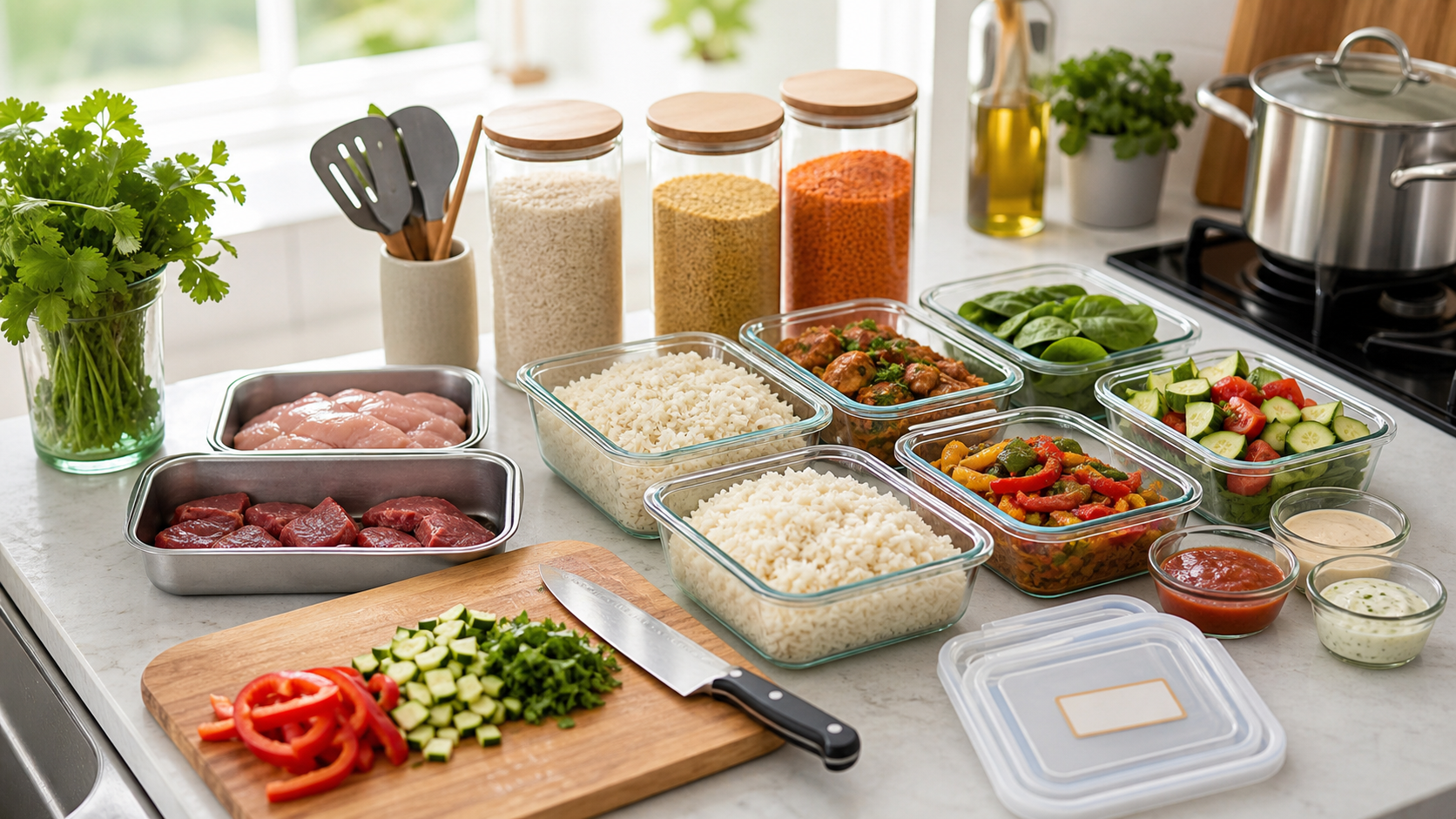
Table of Contents
Halal food preparation means preparing food in a way that protects both halal ingredient standards and basic food safety. In a real kitchen, that means more than buying halal meat. It includes verifying ingredients, keeping the workspace clean, preventing cross-contamination, cooking food properly, cooling it quickly, storing it safely, and reheating it with care.
If you meal prep for a busy week, cook in a shared household, or buy more processed foods than you would like, this is the part that matters most. A meal can start with halal ingredients and still become questionable or simply unsafe if sauces are unverified, utensils are mixed carelessly, or cooked food is left out too long.
Before you read the full guide, use this quick route map:
- What halal food preparation means
- How to check ingredients
- Preventing cross-contamination
- Shared-kitchen workflow
- Complete halal meal prep workflow
- Food safety guidance by country
- High-risk meal prep foods
- Fridge and freezer organization
- Common mistakes
- FAQ
If you are still building your weekly system, start with Start Here, then come back to this page once you know how your shopping, prep, and storage routines fit together.
What Does Halal Food Preparation Mean?
Halal ingredients and halal preparation are related, but they are not the same thing.
Halal ingredients are about what the food is. That includes the meat source, the slaughter standard your household accepts, and whether processed ingredients contain anything you avoid, such as alcohol, gelatin from an unverified source, or animal-derived additives.
Halal preparation is about what happens next. It covers how the food is handled, cooked, stored, served, and protected from contact with ingredients or equipment your household would not accept.
That difference matters in practical ways:
- Halal chicken cooked in a pan that was just used for bacon without being cleaned properly may not meet a household’s halal standard.
- A vegetarian soup may still be unsuitable if it contains wine, unverified stock, or cheese made with animal rennet.
- A halal beef dish can become a food-safety problem if it sits out too long before refrigeration.
So when people ask whether a meal is halal, there are usually two questions hiding inside it:
- Were the ingredients acceptable?
- Was the food prepared and handled in an acceptable way?
Not every Muslim household applies kitchen practices in exactly the same way. Some require separate utensils or storage zones. Others use shared equipment after thorough cleaning. Certification bodies and local communities can also vary. This guide does not issue religious rulings. It focuses on practical kitchen controls that help you prepare food carefully, consistently, and respectfully.
How to Check Ingredients
Ingredient checking is where many halal meal prep problems start. The mistake is usually not dramatic. It is often a stock cube, bottled sauce, shortening, or flavoring that was never checked closely.
Meat and poultry certification
Do not stop at the word “halal” on a shelf label if your household expects evidence beyond marketing language. Look for certification you recognize, ask the butcher what standard is used, and keep a short list of suppliers you trust. If a product is repacked in-store, ask to see the original packaging when possible.
Gelatin
Gelatin appears in desserts, marshmallows, yogurts, gummies, capsules, and some ready-made sauces. If the source is not clearly halal-certified, fish-based, or otherwise acceptable to your household, treat it as an item to verify before buying.
Animal-derived enzymes
Cheese, bakery products, and processed foods can contain enzymes or rennet from animal sources. Some products state “microbial enzymes.” Others do not. If the label is vague and the product matters to your household’s halal standard, contact the manufacturer or choose a clearer alternative.
Stock cubes and broths
Bouillon, broth concentrates, soup bases, and ramen sachets are frequent problem areas. A vegetable-labeled product can still contain animal flavoring, alcohol, or questionable processing aids. Read the entire ingredients panel, not just the flavor name on the front.
Sauces and marinades
Teriyaki sauces, barbecue sauces, oyster sauces, Worcestershire-style sauces, and bottled marinades often need a second look. Anchovy is not a halal issue by itself, but alcohol, meat extracts, or vague natural flavors may be.
Flavorings and extracts
Vanilla extract, some dessert flavorings, and certain savory flavor systems can use alcohol as a carrier. Do not assume “just a little” means it fits your standard. Verify it.
Cooking alcohol
Wine sauces, mirin-style products, cooking wine, beer batters, and alcohol-based marinades should be checked directly, not explained away by habit or recipe tradition.
Shortening and animal fats
Pie crusts, biscuits, refried beans, ready-made pastries, and fried snacks may contain lard, suet, tallow, or unspecified animal fat. This is especially common in foods that look vegetarian at first glance.
Hidden ingredients in processed foods
Processed foods are where “looks fine” becomes expensive. Spice blends, soup mixes, instant noodles, frozen appetizers, flavored rice, desserts, and bakery items can all contain ingredients your household would want to verify.
Practical label-reading checklist
Use this every time a product is new, reformulated, repacked, or from an unfamiliar store:
- Check the ingredient list, not only the front-of-pack claim.
- Check for gelatin, enzymes, rennet, broth, stock, flavorings, extracts, and animal fats.
- Look for alcohol-related terms in sauces, desserts, and marinades.
- Check allergen and advisory statements separately from the main ingredients panel.
- Look for a halal certification mark if that is part of your household standard.
- If the meat or poultry is from a local butcher, ask how it is sourced and whether certification is available.
- If an ingredient is vague, do not guess. Replace it or verify it first.
For shopping days, the Interactive Grocery List is useful for keeping notes on brands, cuts, and certification details so you do not repeat the same label work every week.
Preventing Cross-Contamination
Cross-contamination is not just a restaurant problem. It happens at home when the kitchen gets rushed, crowded, or assumed to be “probably fine.”
Where problems usually happen
- Cutting boards: Raw meat juices and ready-to-eat vegetables should not share an uncleared board.
- Knives: One knife moving from raw chicken to salad herbs without a full wash is enough to create a problem.
- Pans and grills: Residue, grease, and drippings matter more than good intentions.
- Frying oil: Shared oil is often overlooked, especially in mixed households or shared student kitchens.
- Serving utensils: A spoon moved from a non-halal tray into a halal tray is still cross-contact.
- Storage containers: Reused containers must be washed thoroughly before storing halal-ready meals.
- Fridge shelves: Raw meat should not drip onto ready-to-eat food.
- Shared kitchen surfaces: Counters, sink edges, and draining racks can all transfer contamination.
What works in a fully halal kitchen
In a fully halal kitchen, your main task is consistency:
- Keep raw and cooked foods separate.
- Clean tools and counters as part of the workflow, not as a final chore.
- Use one area for raw meat prep and another for ready-to-eat foods.
- Label leftovers clearly so old food does not linger until it becomes unsafe.
What works in a shared kitchen
In a shared kitchen, your system needs clearer boundaries:
- Store your verified ingredients in a dedicated shelf, bin, or drawer.
- Clean counters, boards, and pans immediately before use, not based on assumption.
- Use lined trays or covered dishes in shared ovens when appropriate.
- Keep separate containers and serving utensils for halal-prepped food when that makes your system more reliable.
- Label your meals clearly so nobody serves from the wrong tray or reheats the wrong container.
A simple fridge diagram is useful here: raw meat on the bottom shelf, ready-to-eat meals above it, sauces sealed separately, and dated meal-prep containers in clear rows.
How to Prepare Halal Food in a Shared Kitchen
The easiest way to manage a shared kitchen is to use the same six-step sequence every time.
Clean
Wash your hands. Clear the counter. Clean the board, knife, sink area, and any pan or tray you plan to use. If the kitchen has just been used for non-halal food, do not skip the reset.
Separate
Set out halal ingredients apart from anything else. Keep raw meat away from salad, fruit, dips, bread, and cooked food. If you use separate utensils, bring them out at the start instead of halfway through.
Verify
Check labels before opening the package, not after seasoning is already in the bowl. Verify the meat, stock, sauce, and any convenience items. This is also the moment to confirm whether the oil, grill, or oven tray is acceptable for your kitchen standard.
Cook
Cook the food thoroughly, using a thermometer when it matters. Do not return cooked food to the same plate, tray, or marinade that held it raw.
Store
Once the food is cooked, move it into clean containers. Cool it promptly. Decide which portions belong in the fridge and which should go straight to the freezer.
Label
Write the dish name and preparation date on the container. In a shared kitchen, add a short note if needed, such as “halal chicken curry” or “freeze first.”
This system works because it reduces the number of decisions you make when you are tired. It also leaves room for different household standards without pretending every Muslim kitchen operates identically.
The Complete Halal Meal Prep Workflow
Use this as your repeatable weekly sequence:
- Plan the meals. Choose the meals that solve the week’s actual pressure points, not an imaginary perfect routine. The Halal Meal Plan hub is a good place to start if you want a ready-made weekly structure.
- Verify ingredients. Check meat, broths, sauces, oils, spice blends, and convenience foods before you prep.
- Clean the preparation area. Reset counters, boards, knives, pans, and storage containers.
- Separate raw and ready-to-eat food. Keep meat prep away from salad, bread, dips, and cooked items.
- Cook food safely. Use a thermometer for foods that are easy to undercook or over-guess.
- Cool food promptly. Shallow containers help food cool faster and more evenly.
- Portion meals. Pack lunches separately if needed and freeze the portions you will not use soon.
- Label containers. Include the dish name and preparation date at minimum.
- Refrigerate or freeze. Raw meat goes low; ready-to-eat meals go above it.
- Reheat safely. Reheat only what you plan to eat and avoid multiple warm-up cycles.
If you want help estimating portions and container counts before you cook, the Weekly Meal Prep Calculator fits naturally into this workflow.
Food Safety Guidance by Country
Official guidance does not line up perfectly across the United States, United Kingdom, Canada, and Australia. That matters because many households meal prep once, then eat across several days. The safe answer depends on where you are and which source you are following.
| Country | Refrigerating leftovers | Cooling cooked food | Fridge temperature | Freezer use | Reheating | Cooked rice safety |
|---|---|---|---|---|---|---|
| United States | FDA says refrigerate or freeze prepared food and leftovers within 2 hours. | FDA advises prompt chilling; shallow containers are the practical home approach. | 40°F (4°C) or below. | 0°F (-18°C) or below. | Reheat leftovers to 165°F (74°C); bring sauces, soups, and gravies to a boil. | No separate FDA home-storage rule for cooked rice was located on July 18, 2026. Follow the general 2-hour chilling rule and the general leftovers approach, with extra care because cooked rice should not cool slowly. |
| United Kingdom | FSA says cool leftovers, cover them, and refrigerate within 1 to 2 hours. | The same FSA guidance emphasizes quick chilling and freezing when needed. | The FSA page focuses on chilling quickly rather than a single consumer-setpoint number on the page used here. | Freeze leftovers within 2 days if you will not eat them in time. | Reheat until steaming hot all the way through, and the FSA says leftovers should only be reheated once. | UK guidance is the strictest in this comparison: eat refrigerated rice within 1 day. |
| Canada | Health Canada says refrigerate or freeze leftovers within 2 hours. | Refrigerate promptly in uncovered shallow containers; very hot items can be refrigerated once steaming stops. | 4°C (40°F) or lower. | -18°C (0°F) or lower. | Reheat to at least 74°C (165°F); do not reheat the same leftovers more than once in general. | Canada's leftover guidance is broader rather than rice-specific. Use the prompt cooling rule and, for meal-prep rice dishes, avoid treating rice as a long-fridge staple by default. |
| Australia | FSANZ says keep perishable leftovers in the fridge and use them within a few days. | Consumer guidance uses the 2-hour/4-hour rule. FSANZ also publishes a formal cooling benchmark for potentially hazardous food: from 60°C to 21°C within 2 hours, then to 5°C within 4 more hours. | 5°C or colder. | Freeze leftovers if you will not use them soon; FSANZ also says food can go back in the fridge only if it has been out for less than 2 hours. | Reheat quickly to piping hot; avoid reheating potentially hazardous food more than once. | FSANZ specifically flags Bacillus cereus risk: cool quickly, refrigerate promptly, and discard refrigerated leftovers if not eaten within 3 to 4 days. |
The practical takeaway is simple: do not assume one universal “meal prep lasts X days” rule. UK rice guidance is stricter than the others. Australia gives more explicit temperature-control rules. The U.S. and Canada give clearer refrigerator and reheating temperatures. If you prep for a multi-day week, freeze later portions earlier instead of trying to stretch every dish to the edge of a rule.
WHO’s broad food-safety advice supports the same overall pattern: refrigerate cooked food promptly, do not leave it out for more than 2 hours, keep the refrigerator below 5°C, avoid overcrowding, and reheat leftovers until steaming hot.
High-Risk Meal Prep Foods
Some foods deserve extra attention because they spoil faster, cool unevenly, or are easy to reheat badly.
Cooked rice
Rice is a meal-prep favorite because it is cheap, versatile, and easy to portion. It is also easy to mishandle. The main problem is not that rice is unusual; it is that large batches cool slowly unless you spread or portion them quickly. If rice is part of your prep routine, cool it fast, pack it into shallow containers, and use the country guidance above instead of guessing.
Chicken
Chicken creates two common problems: undercooking and raw-juice spread. Prep it in a defined area, cook it thoroughly, and never place cooked chicken back on the tray or board that held it raw.
Ground meat
Ground meat needs careful cooking because bacteria can be mixed throughout the product rather than remaining only on the surface. That matters for kofta, burgers, meatballs, and batch sauces.
Seafood
Seafood generally has less fridge forgiveness after cooking than heavier stews or braises. If you prep seafood meals, make fewer portions, chill them quickly, and do not assume they behave like chicken curry or lentil soup.
Eggs
Egg dishes can be practical for breakfasts and lunches, but they are still cooked leftovers and should be cooled, stored, and reheated carefully.
Sauces
Sauces are often the hidden weak point because they get tasted with multiple spoons, left cooling in the pan too long, or contaminated by raw marinades. Use clean spoons, separate raw and cooked marinades, and portion sauces early.
Dairy-based meals
Creamy pasta dishes, yogurt-based sauces, and cheese-heavy bakes do not like long warm holds. Get them into cold storage promptly and do not keep reheating the same container for convenience.
Fridge and Freezer Organization
Good organization protects both halal standards and food safety.
Where raw meat should be stored
Store raw meat, poultry, fish, and seafood low in the fridge, ideally on the bottom shelf and in sealed containers so nothing can drip onto ready-to-eat food. Health Canada states this point clearly, and it is a good rule everywhere.
How to separate ready-to-eat meals
Keep cooked meals, salad boxes, cut fruit, sauces, and snacks above raw ingredients. Use separate bins if the household fridge gets crowded.
Container labeling
At minimum, label:
- dish name
- preparation date
- freeze date if relevant
- any final step still needed
Preparation dates and freezer dates
Do not trust memory. If you batch-cook two similar dishes in the same week, the missing date becomes the reason food gets wasted or kept too long.
First in, first out
Put older meals in front and newer meals behind them. This one habit is more useful than buying another set of containers.
Avoid overcrowding
WHO and Health Canada both warn against overstocking the fridge because cold air needs room to circulate. If the fridge is packed tight, cooling slows down and temperatures become less reliable.
If bulk meat is part of your routine, Safe Freezer Storage Rules for Halal Meat & Poultry goes deeper on portioning, wrapping, and thawing.
Common Halal Food Preparation Mistakes
These are the mistakes that show up in real kitchens:
- Assuming vegetarian automatically means halal.
- Checking the meat but not checking the sauce.
- Forgetting that stock cubes, ramen sachets, and soup bases need verification too.
- Using shared frying oil without confirming what has been cooked in it.
- Moving the same knife or serving spoon between raw and cooked food.
- Trusting vague halal marketing without looking for evidence your household accepts.
- Leaving cooked food out too long because you plan to pack it “in a minute.”
- Meal prepping for seven refrigerated days without checking the official local guidance first.
- Forgetting preparation dates and then relying on smell or memory.
- Reheating the same container multiple times for convenience.
- Storing raw meat above cooked food in the fridge.
- Using unverified gelatin, shortening, or animal-derived flavorings in otherwise simple meals.
FAQ
What is halal food preparation?
Halal food preparation means preparing food in a way that protects both halal ingredient standards and basic food safety. In practice, that includes checking ingredients, keeping the kitchen clean, preventing cross-contamination, cooking food safely, cooling it promptly, storing it correctly, and reheating it properly.
Can halal and non-halal food be prepared in the same kitchen?
Yes, halal and non-halal food can be prepared in the same kitchen if the kitchen is managed carefully. That usually means cleaning surfaces and equipment properly, separating ingredients, preventing cross-contact, and following the halal standards your household or certifier expects.
Do halal foods require separate utensils?
Some households use separate utensils for halal food, while others use the same utensils after thorough cleaning. The practical rule is to avoid cross-contact and follow the standard your household, community, or certification requirement uses.
Is vegetarian food always halal?
No, vegetarian food is not automatically halal. Sauces, cheeses, flavorings, stock cubes, gelatin, alcohol-based extracts, and shared cooking equipment can all make a vegetarian dish unsuitable for a halal kitchen.
How can I prevent cross-contamination?
Prevent cross-contamination by separating raw and ready-to-eat foods, cleaning boards and counters, using clean utensils, storing raw meat below cooked food, checking shared oil and pans, and labeling containers clearly.
How long can halal meal prep stay in the fridge?
There is no single universal storage window for every halal meal prep dish. Use the official food-safety guidance for your country, the food type involved, and whether the dish should be frozen earlier instead of staying refrigerated for several days.
Can cooked halal meals be frozen?
Yes, cooked halal meals can be frozen if they were prepared safely, cooled promptly, packaged well, and labeled clearly. Freezing helps protect quality and can be safer than keeping extra portions in the fridge too long.
Can the same oven be used for halal and non-halal food?
Yes, the same oven can be used if trays, racks, dishes, and spills are managed carefully and the halal food is protected from direct contact or drips. Some households use extra barriers such as lined trays or covered dishes.
What ingredients should Muslims check on labels?
Common label checks include meat and poultry certification, gelatin, animal-derived enzymes, broths and stock cubes, sauces, marinades, flavorings, extracts, cooking alcohol, shortening, animal fats, and vague processed-food ingredients.
How should cooked rice be stored?
Cooked rice should be cooled quickly, refrigerated promptly, kept in clean covered containers, and reheated thoroughly. Because official rice guidance differs by country, use the stricter local rule that applies to your kitchen.
Conclusion
Good halal food preparation is not about making the kitchen feel rigid. It is about making your standards visible in the way you shop, prep, store, and serve food. Once you verify ingredients, control cross-contact, label properly, and follow the official guidance that applies where you live, halal meal prep becomes simpler, calmer, and more repeatable.
If you want the next step after this guide, start with the Halal Meal Plan hub or use the Weekly Meal Prep Calculator to turn halal food preparation into a workable weekly system.
Efficiency Multiplier
Halal Food Preparation Checklist
- Choose meals before shopping so every ingredient has a purpose.
- Confirm meat, poultry, stocks, sauces, gelatin, and flavorings before buying.
- Check labels for alcohol, animal fats, animal enzymes, and vague flavor terms.
- Clean counters, sinks, knives, and boards before prep starts.
- Keep raw meat and ready-to-eat foods physically separate.
- Use separate utensils, pans, or freshly washed equipment when standards require it.
- Do not reuse marinades, serving spoons, or frying oil without verifying they stayed halal.
- Cook food thoroughly and avoid guessing doneness by color alone.
- Cool cooked food promptly in shallow containers.
- Label every container with the dish name and preparation date.
- Store raw meat low in the fridge and ready-to-eat meals above it.
- Freeze portions you will not use within the official guidance for your country.
- Reheat only what you need, and reheat it fully.
Halal Prep Lab Team
Editorial Team
This site is published under the Halal Prep Lab team byline. We focus on practical meal planning, storage, and grocery systems for home kitchens. We do not claim medical, dietetic, or professional food safety credentials that we do not have.
Where a page includes factual food safety guidance, we cite the original source directly. You can read our standards in the editorial policy or contact us through the contact page.
Sources & Verifiable Data
To maintain our commitment to absolute accuracy, safety, and transparency, all factual claims, cold storage guidelines, and technical advice in this guide have been cross-referenced with official safety agencies or peer-reviewed culinary datasets:
- U.S. Food and Drug Administration (FDA):Tips to Chill Food (Food Safety for Moms-to-Be)(Retrieved 2026-07-18)
Editorial Integrity & Disclosure
Halal Prep Lab is committed to accuracy, clarity, and safety. Our meal planning templates, storage guidelines, and food safety content are grounded in verified food preservation standards.
We do not claim our content is medically, nutritionally, or professionally reviewed unless genuine reviewer credentials and verification details are explicitly indicated. All storage guidelines are for educational and planning purposes. Always consult local guidelines or a professional food safety inspector for commercial operations.
Turn this guide into a weekly kitchen plan
Use the private planning tools to map meals, organize shopping, and keep useful guides saved in your browser.